Buyer’s Guide
How to Choose the Right Base Station Antenna for Your Site
7 min read
Start with the band plan, not the datasheet
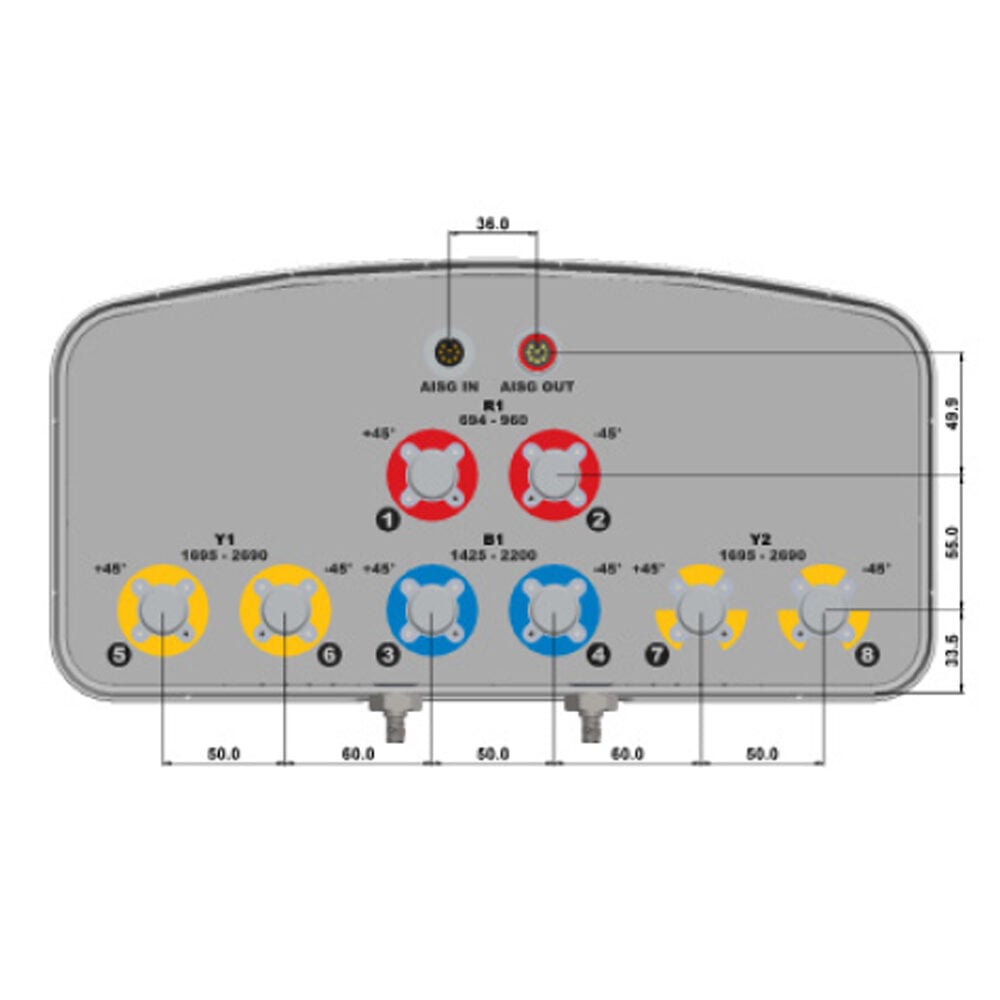
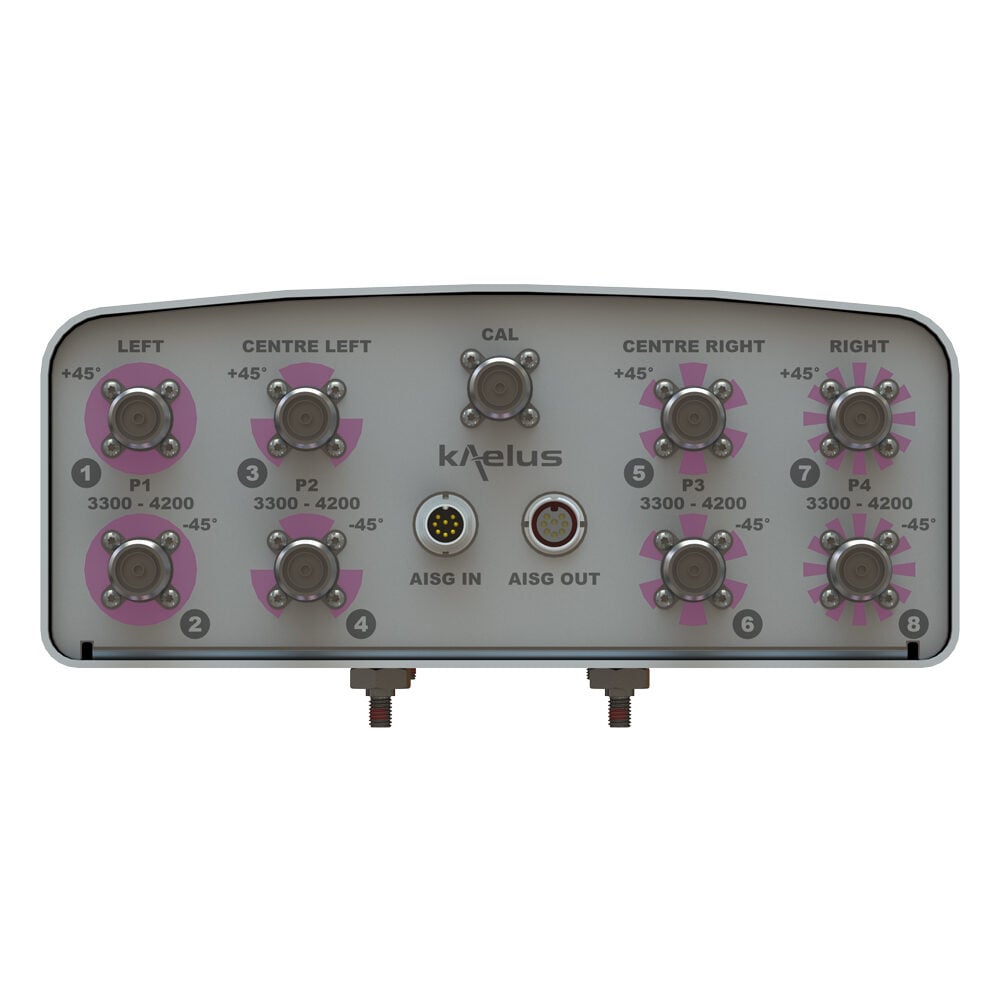
Every antenna decision flows from the spectrum you hold and the spectrum you plan to add. A site carrying only low-band 700–960 MHz for coverage has very different needs to an urban sector stacking low-band, mid-band 1695–2690 MHz and C-band 3300–4200 MHz on the same pole.
Buying an antenna that only covers today’s bands is the most common — and most expensive — mistake we see. Re-climbing a tower to swap antennas costs far more than the price difference between a 4-port and an 8-port panel. If a C-band or mid-band expansion is on your three-year roadmap, spec ports for it now.
Browse base station antennasPort count and MIMO: 4T4R vs 8T8R
Port count sets your MIMO ceiling. A 4-port antenna like the Kaelus P6ODMU01 supports 4T4R on a single band — fine for low-band coverage layers. Mid-band capacity layers increasingly demand 8T8R, which is where 8-port panels such as the Kaelus PBOQBU01 (8×1695–2690 MHz) earn their place.
For consolidation sites that must carry everything on one radome, high-port-count multiband panels — 10-port designs like the P6BPEU01 combining 2 low-band and 8 mid-band ports — let you retire two or three legacy antennas per sector. Fewer radomes means less wind load, lower lease costs and a cleaner tower top.
Beamwidth: 65° sector, 40° Supercell or 360° canister
The classic three-sector macro site uses 65° horizontal beamwidth panels — the default for a reason, giving even coverage overlap at sector edges. But it is not the only geometry.
Long, narrow coverage corridors — highways, rail lines, coastal strips — are better served by narrow-beam “Supercell” antennas like the Kaelus P4GDLU01 (40° beamwidth), which push energy further down the corridor instead of wasting it sideways.
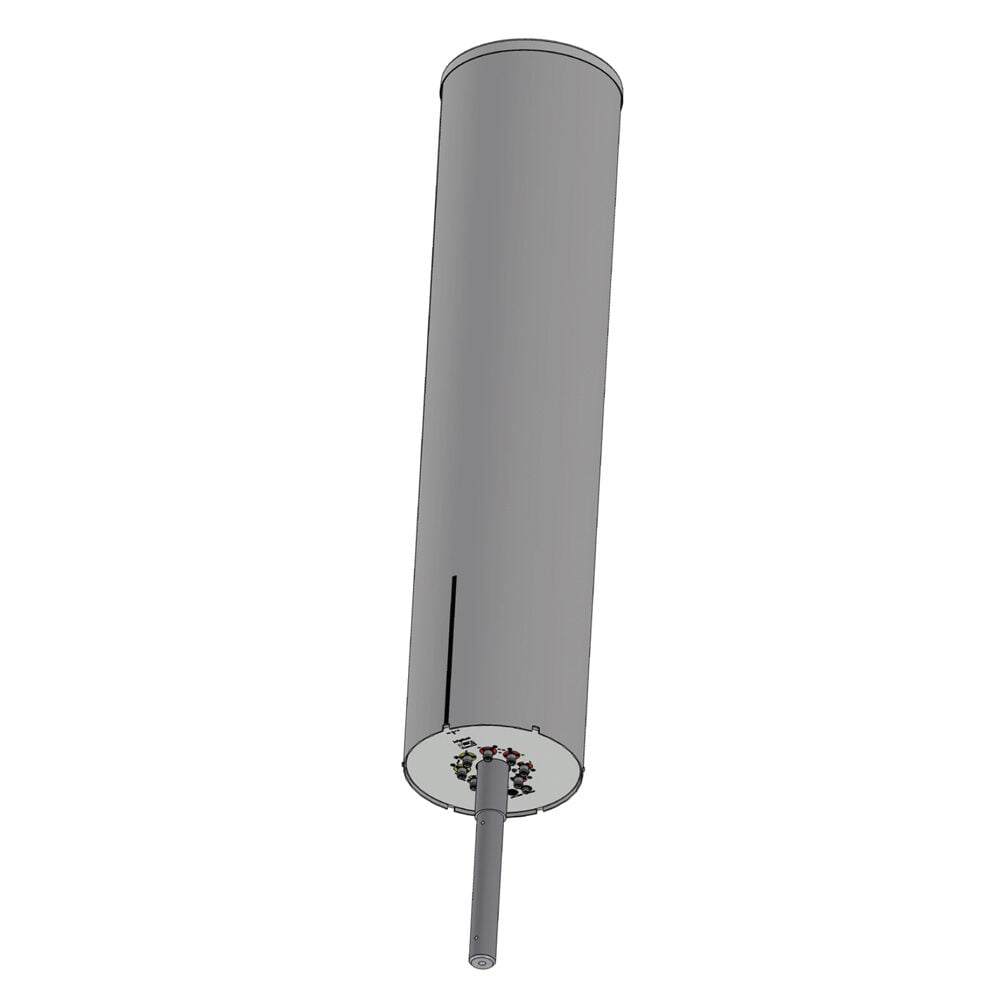
Small footprint sites, poles and rooftops where sectorisation is impractical can use omnidirectional canister antennas such as the Kaelus M0RQMU01 — a 360° pattern in a slim, low-visual-impact housing that planning authorities tend to approve faster.
RET, wind load and the details that bite later
Remote Electrical Tilt (RET) is now table stakes: optimising downtilt from the NOC instead of sending a rigger up the tower pays for itself after the first optimisation cycle. Check the AISG version and whether the antenna daisy-chains RET across bands.
Wind load is the silent budget-killer. Every antenna adds projected area, and structural upgrades to carry it can dwarf the hardware cost. This is another argument for multiband consolidation panels — and for checking the mechanical spec sheet as carefully as the RF one.
Finally, verify PIM ratings. A low-PIM antenna is wasted if the jumpers and connectors behind it are not specified to match — a topic we cover in depth in our co-siting and interference guide.
See multibeam antennas for high-capacity venues