Technical Guide
PIM, Interference and Co-Siting: Keeping Shared Cell Sites Clean
8 min read
Why shared sites get noisy
Co-siting is the norm now — multiple operators, multiple generations of technology, broadcast and public-safety systems all sharing one structure. Every extra transmitter raises the RF noise floor the others must live with.
The symptoms are familiar: uplink desense that shrinks cell radius, dropped calls at the cell edge, throughput that mysteriously degrades when a neighbouring tenant upgrades their radios. The root causes are usually blocking (a strong off-band carrier saturating a receiver), spurious emissions and passive intermodulation (PIM) — new interference frequencies generated in the passive path itself.
Filters: surgical removal of off-band energy
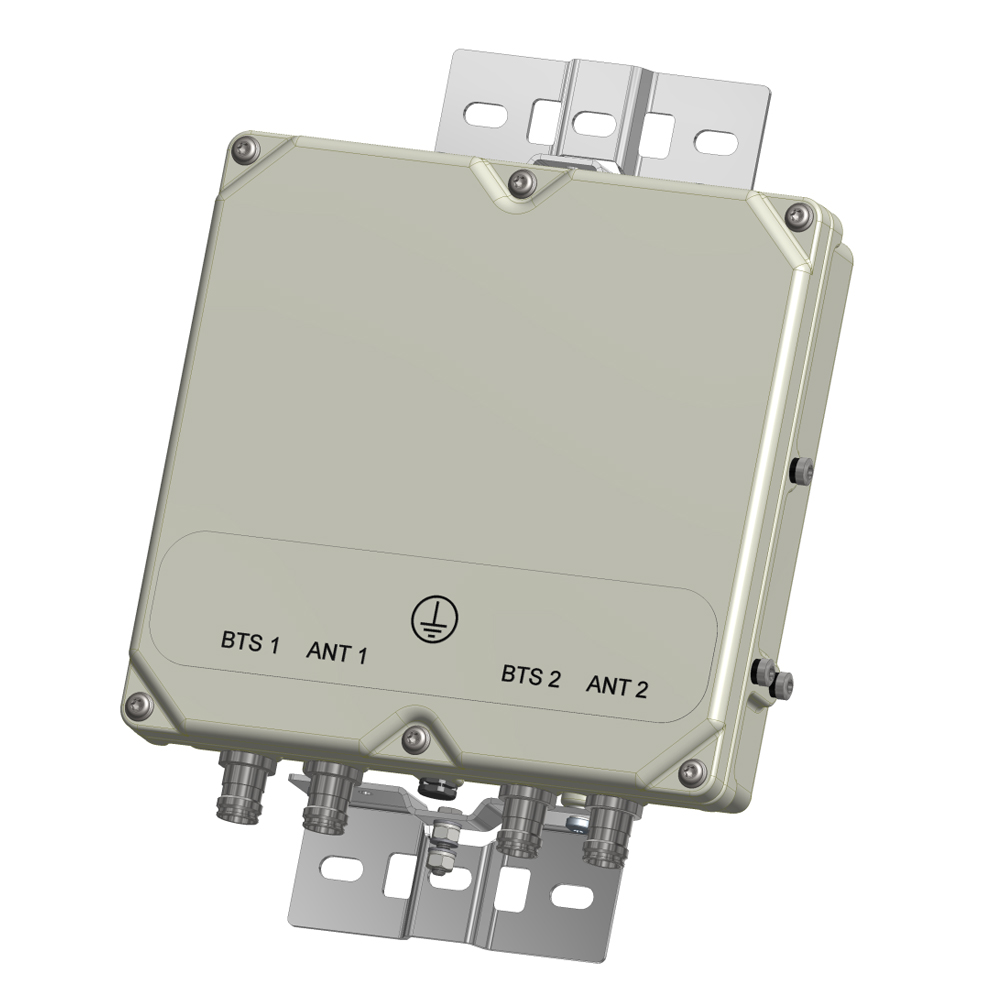
Bandstop and bandpass filters are the first line of defence. A bandstop (notch) filter like the Kaelus BSF0020 series inserts deep rejection at a specific aggressor band — for example protecting an LTE receiver from an adjacent broadcast or public-safety transmitter — while passing everything else with minimal loss.
Bandpass filters like the Kaelus BPF0016 take the opposite approach: pass only your licensed block and reject everything outside it. On dense rooftops where you cannot control what neighbours transmit, a bandpass in the receive path is cheap insurance.
Because these are passive, low-PIM devices, they add almost no maintenance burden — but their specifications (rejection depth, insertion loss, PIM rating) must be matched to your exact band plan, which is where our engineers can help.
Tower mounted amplifiers: recovering the uplink
Sites are usually uplink-limited: handsets transmit at a fraction of a watt while the base station transmits at tens of watts. Every dB of feeder loss between the antenna and the radio comes straight off your uplink budget.
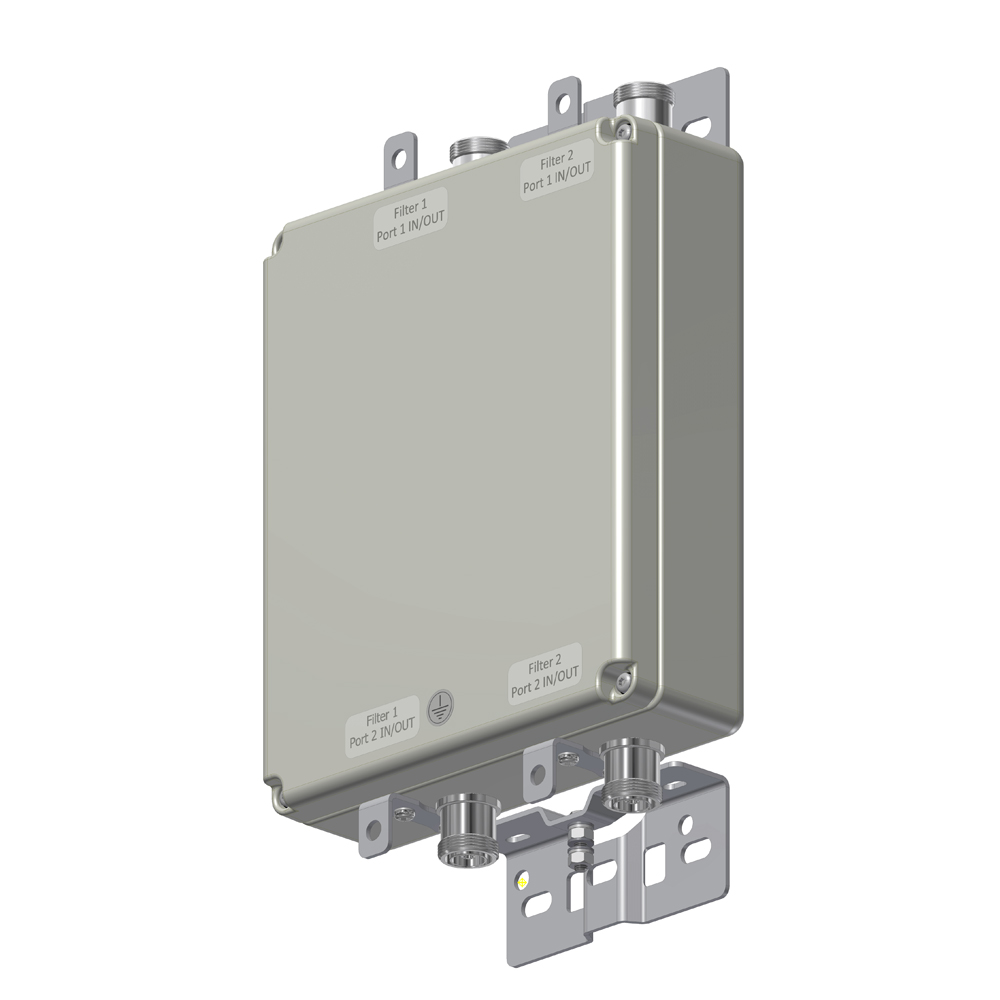
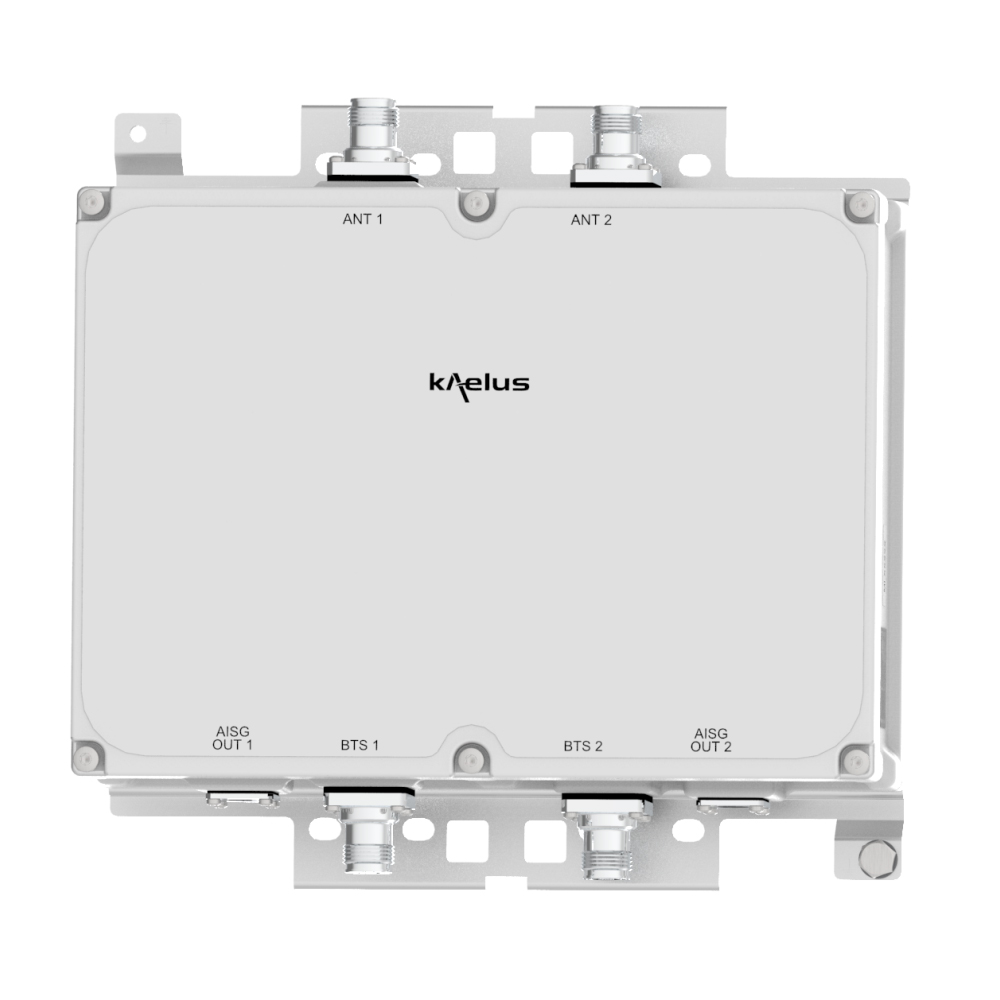
A tower mounted amplifier (TMA) such as the Kaelus MI-158 or KA-1004 sits directly behind the antenna and amplifies the received signal before it travels down the feeder, effectively cancelling that loss. On tall structures or sites with long cable runs, a TMA can recover 3–6 dB of uplink — often the difference between a marginal cell edge and a solid one.
Modern TMAs integrate filtering and AISG transparency, so they coexist with RET controllers and add co-siting protection at the same time.
Combiners: sharing feeders without sharing problems
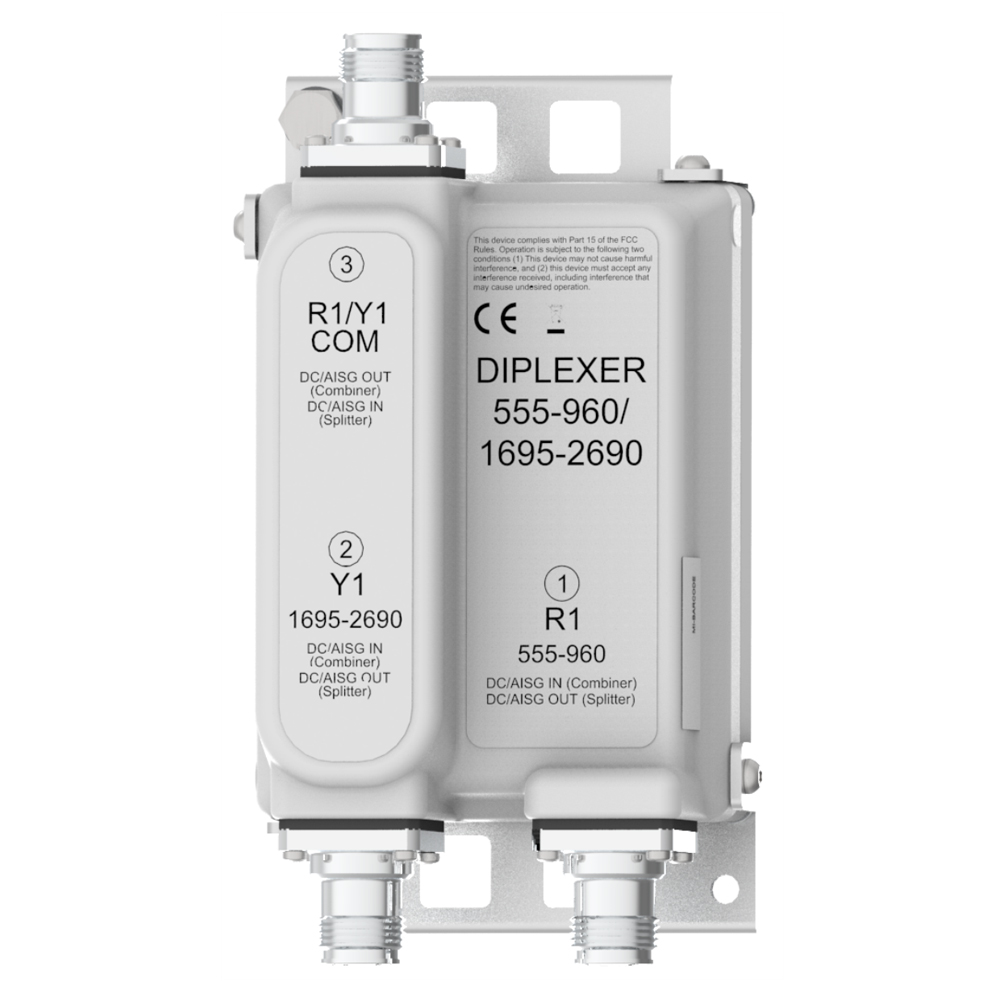
When multiple bands or operators share a feeder and antenna, multi-band combiners do the merging cleanly. A diplexer/combiner like the Kaelus DBC0115 joins low-band and mid-band paths onto one cable with high isolation between them, so each radio sees only its own band.
Done right, combining halves the number of feeders on the tower — less wind load, less weight, fewer connectors (and every connector is a potential PIM source). Done wrong, with poorly specified isolation or high-PIM junctions, it becomes the interference source you were trying to eliminate. Specification matters.
A practical clean-up sequence
When a shared site underperforms, work the passive path in order: first sweep and PIM-test the existing feeders and connectors; second, add bandstop or bandpass filtering against identified aggressors; third, deploy TMAs if the uplink is still short; and finally rationalise the tower top with combiners and multiband antennas to reduce the passive component count altogether.
Most co-siting problems are solved with a few well-chosen passive components — the hard part is choosing them. That’s what we do.